From the booked slot to the paid claim, one visit, five steps.
What the front desk, the nurse, the provider and the billing team see and do at each step, which visit purposes exist (Welcome to Medicare, Annual Wellness, Star-rate, general, medication), and why an HMO patient's visit is paid and reported differently from a fee-for-service patient's.
One visit, five steps, one fork
Booking creates the appointment; check-in verifies the patient in two levels and opens the visit record; the nurse rooms the patient; the provider works one of four visit purposes; signing the note turns the visit into claim lines; the claim goes to the payer, to the health plan as data, and back to the patient as the next visit.
- 1 · BookingProvider, slot and the visit purpose. A wellness booking already knows when Medicare pays the next one.
- 2 · Check-in, two levels
Level 1: who is here (ID and card scanned, chart matched). Level 2: can this visit be paid (coverage in force, purpose checked).
- 3 · Nurse
Vitals, rooming, screenings. Provider start time stamped when the visit opens.
- 3 · Provider works the visit purpose
The appointment type chosen at booking decides what the note asks for.
- Welcome to Medicare / Annual Wellnessleads to Health risk assessment, prevention plan, G-code picked from the chart
- Star-rate visitleads to The Star-rate questions and the open gap list; evidence closes the gaps
- General visitleads to Problem assessed and coded; E/M level by decision-making or time
- Medication visitleads to Refill only: no claim unless a condition is assessed
- 4 · Sign and bill
Signing stamps the provider's end time and builds the claim: CPT lines, diagnoses, member ID. A claim the payer would deny is refused with the reason.
- 5 · Next stepCheckout with the documents; the claim to the payer for payment, or to the HMO and IPA as data; the next visit booked.
Each desk, in its own words
The EMR does the checking; the people do the visit. Here is what each role sees and what it is asked to do.
Front desk
- Pick the visit purpose when booking. For a Medicare patient, enter the Part B start date on the chart once: the EMR then knows whether the first wellness visit is the Welcome to Medicare visit or an Annual Wellness Visit.
- At check-in, scan the ID and the insurance card; a full match ticks the boxes. A difference is never accepted silently: fix the chart or record that you accepted it.
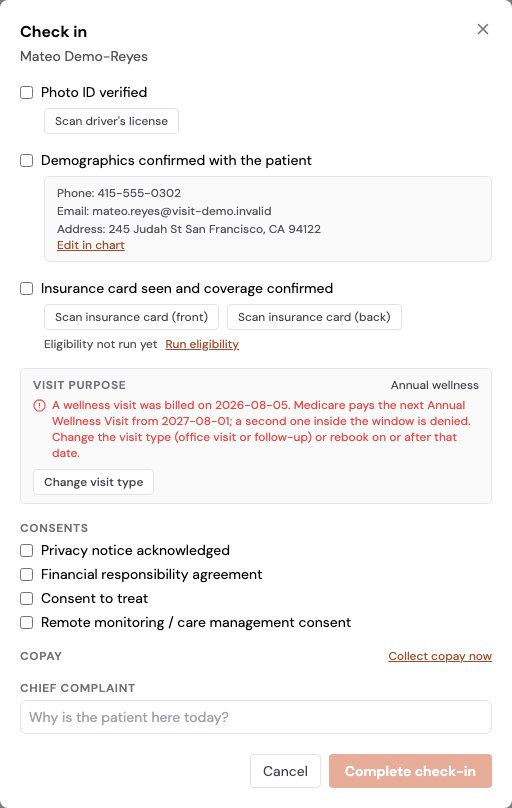
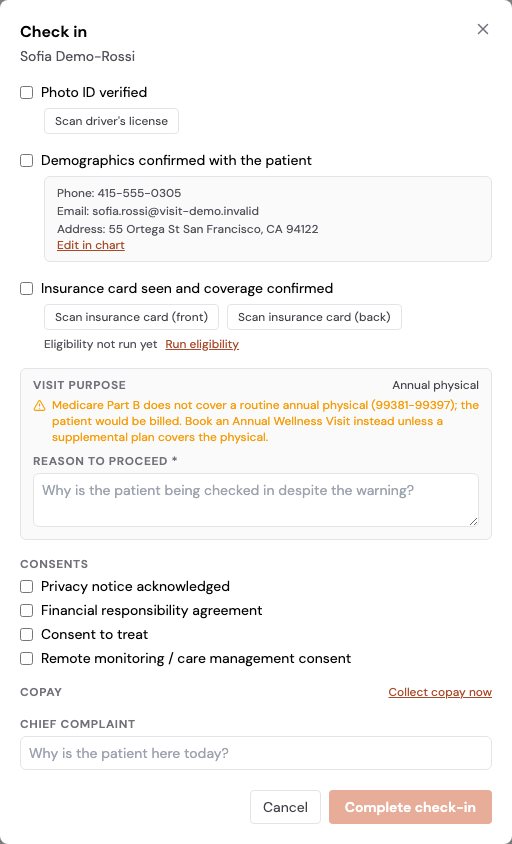
- Read the visit-purpose box before completing check-in. A block means the claim would be denied, so change the visit type. A warning needs a reason, which stays on the visit.
- At checkout, take the balance, print or send the documents, and book the next visit the screen suggests.
Nurse / MA
- Take vitals from the slot and room the patient; the blood pressure taken here is the one the quality measures count.
- Run the rooming checklist and the screenings. On a wellness visit, start the health risk assessment so the provider finds it answered.
- Return readings from home devices never replace the clinic reading.
Provider
- On a wellness visit the health risk assessment sits on the note; the Billing tab picks the right G-code from the chart and refuses one inside Medicare's window.
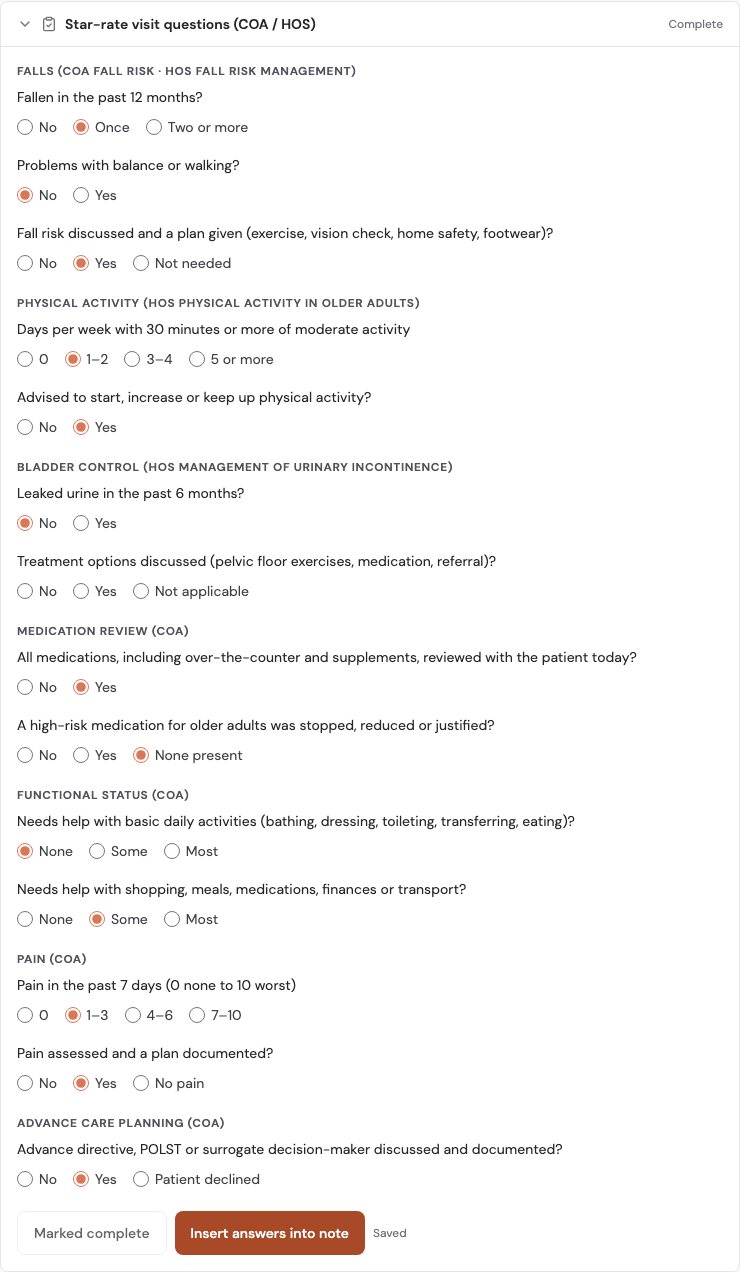
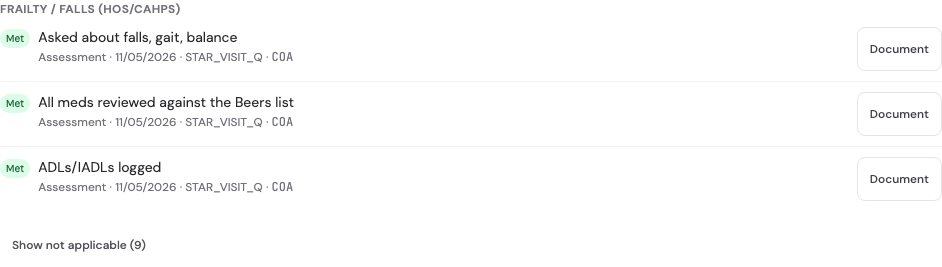
- On a Star-rate visit the note carries its own questions (falls, activity, bladder control, medication review, function, pain, advance care planning); completing them closes the matching Star items.
- Code the Assessment with the conditions you addressed; a condition assessed this year counts for risk adjustment even before the problem list is updated. The note lists last year's conditions not yet assessed.
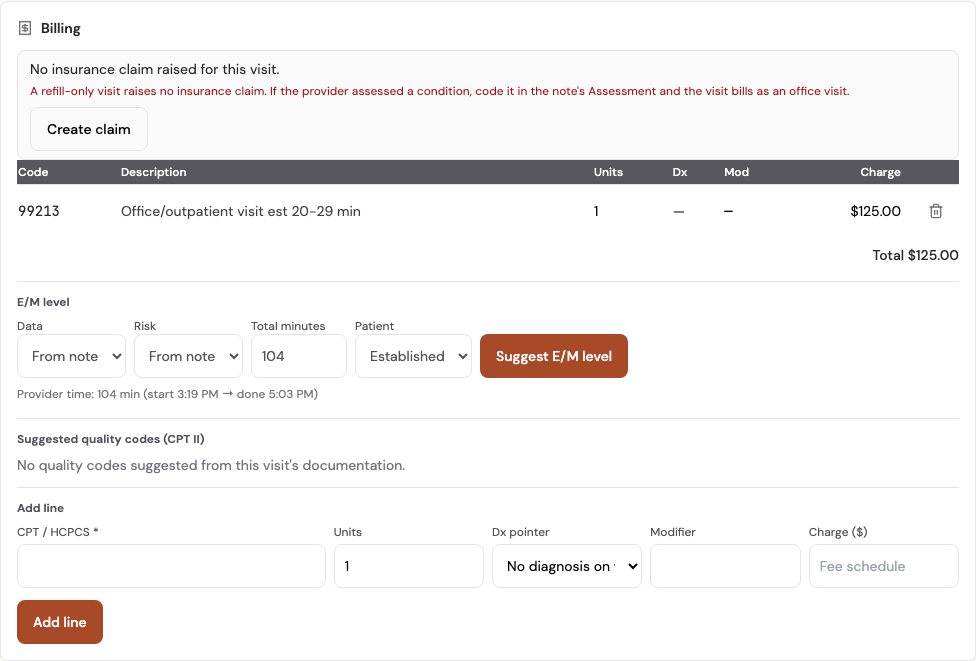
- Press Done with patient when you leave the room. Signing stamps it otherwise, and the minutes feed time-based E/M.
Billing team
- The claim is built at signature with the CPT lines, up to twelve diagnoses and the member ID. Refused claims (self-pay, no charge, no diagnosis, refill only, wellness code inside the window) show their reason on the visit's Billing tab.
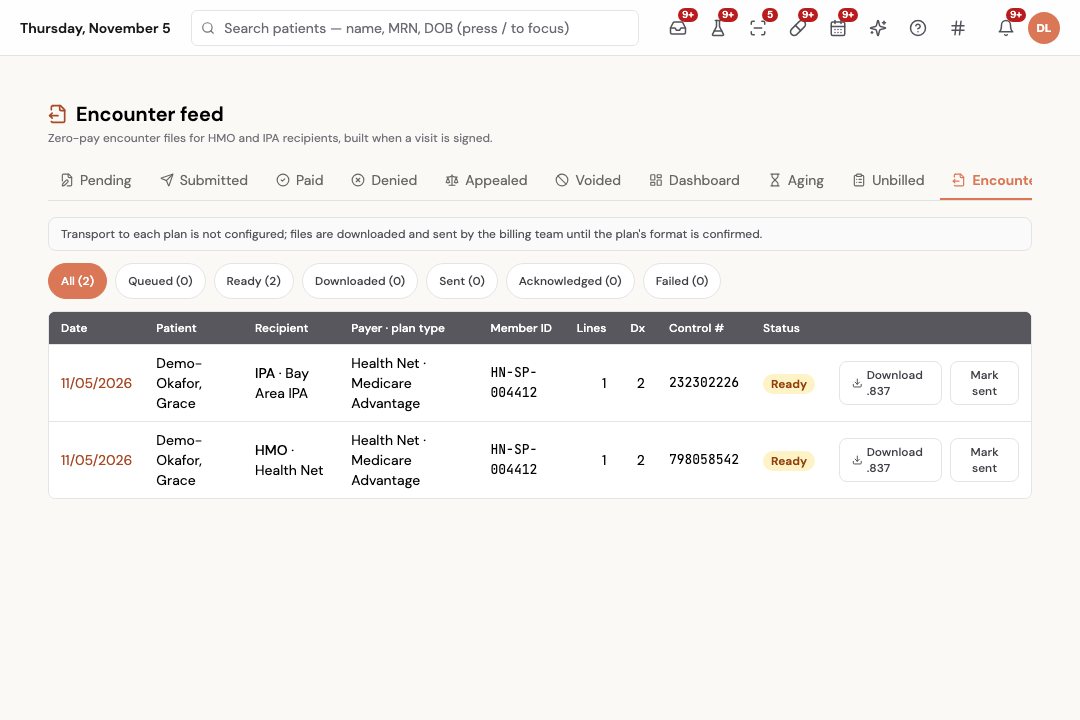
- For HMO and Medicare Advantage patients the same visit is also a zero-pay encounter file for the plan and the IPA. Download it from Billing, send it, mark it sent.
- Watch the recapture rate and the open Star items: both are next year's revenue for an HMO panel.
Two levels, before the visit opens
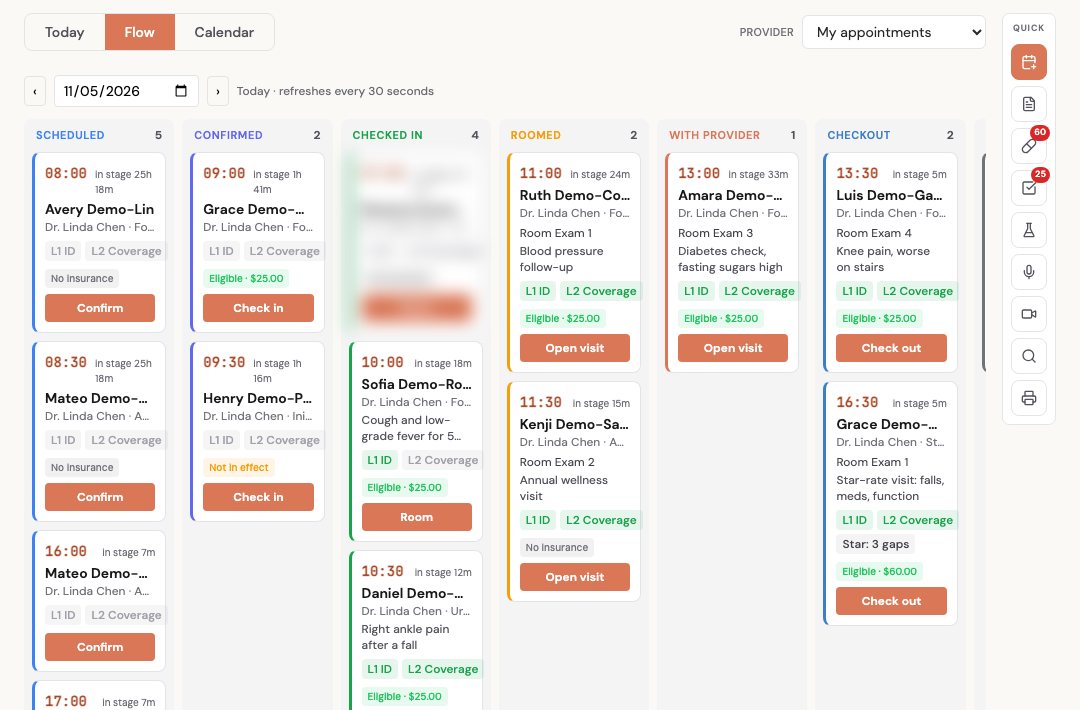
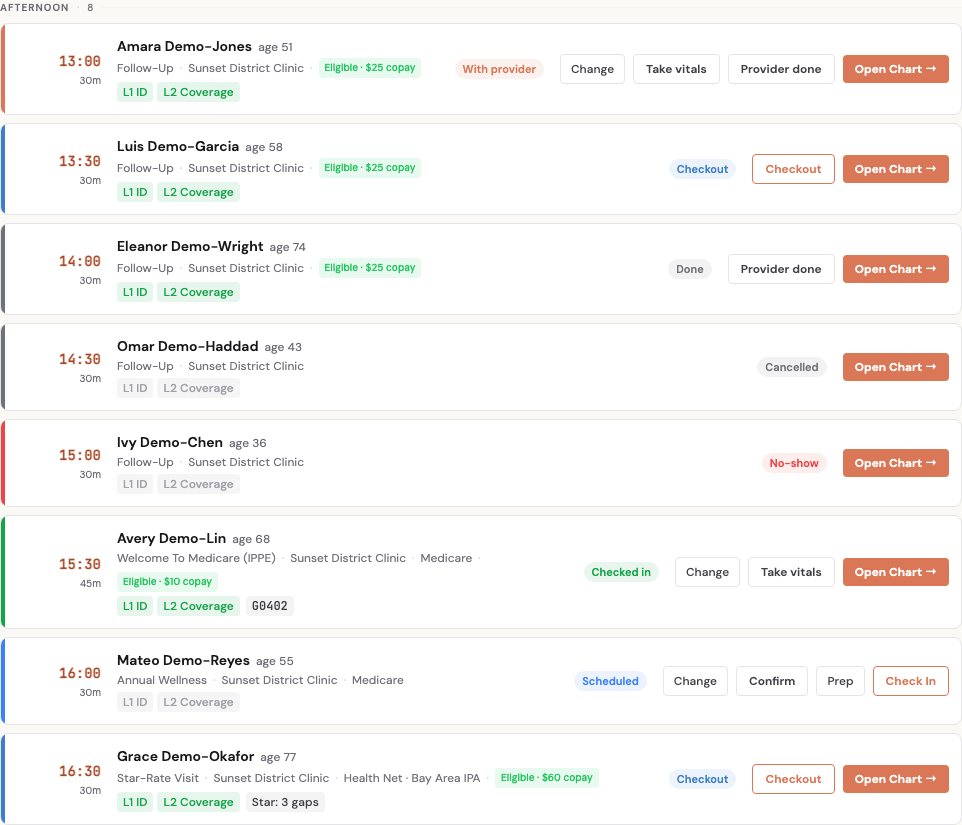
Level 1 proves who is at the desk. Level 2 proves the visit, as booked, can be paid: coverage in force, and the purpose checked against the chart. Both show on the slot as a pill: grey not done, green done, amber done on an accepted difference or a recorded reason.
Five purposes, four branches
The purpose is chosen at booking. It decides what the note asks for, which code the claim carries, and what the payer and the plan do with it.
- G0402
Welcome to Medicare (IPPE)
Who: Medicare patients in their first twelve months of Part B. Once in a lifetime.
Asks: Health risk assessment, the preventive-services education, end-of-life planning.
Bills: G0402, no copay. Refused once the first Part B year has passed or if it was billed before.
- G0438 · G0439
Annual Wellness Visit
Who: Every Medicare patient, once the IPPE year is over and eleven full months have passed since the last wellness visit.
Asks: Health risk assessment, the written prevention plan and screening schedule.
Bills: G0438 the first time, G0439 after. A second one inside the window is refused at check-in and at billing.
- Office visit + evidence codes
Star-rate visit
Who: Patients with open quality measures on the plan's list; the open items are shown on the slot.
Asks: The Star-rate questions (falls, activity, bladder control, medication review, function, pain, advance care planning) and the measure evidence: blood pressure, A1c, kidney tests, eye exam, screenings.
Bills: The office visit plus zero-dollar evidence lines; completed items close the plan's care gaps at signature.
- 99202–99215
General visit
Who: Anyone with a problem to address: new patient, follow-up, sick, urgent, chronic care.
Asks: The problem assessed and documented; the level comes from decision-making or from the provider's time.
Bills: The office visit with the Assessment's diagnoses first. Each chronic condition documented counts for risk adjustment this year.
- Refill, or 99211–99213
Medication visit
Who: Refills and dose checks.
Asks: Nothing beyond the refill, unless the provider assesses the condition behind the drug.
Bills: No claim for a refill alone. Assess and document the condition and it bills as a general visit.
- Different questions
Wellness visit versus Star-rate visit
The wellness visit asks Medicare's health risk assessment, answered by the patient. The Star-rate visit asks the questions behind the plan's quality measures, documented by the provider. They never appear on the same visit, and the care-gap list with its evidence stays on every visit.
The same claim, two jobs
The flow is identical for every patient until the claim leaves the clinic.
Fee-for-service and PPO
The claim is money. The payer pays each visit; the remittance posts against the claim and the balance goes to the patient. Correct levels, a modifier-25 office visit beside a wellness visit, and clean claims paid the first time are what raise revenue.
HMO and Medicare Advantage
The claim is data. The plan already paid a monthly capitation; it needs the visit's diagnoses for next year's risk adjustment and the measure evidence for its Star rating, and shares its Star bonus back as pay-for-performance. Every chronic condition re-documented each year and every open measure closed is next year's revenue.
What it looks like
Screens from the EMR on a demo day: synthetic patients, real workflow.



Questions clinics ask
What is the difference between the wellness questionnaire and the Star-rate questions?
The wellness visit's health risk assessment is Medicare's questionnaire: the patient rates their own health and risks (tobacco, alcohol, mood, loneliness, falls, hearing, home hazards). The Star-rate questions are the ones behind the plan's quality measures, asked and documented by the provider: falls and a fall plan, physical activity, bladder control, a medication review, daily function, pain, advance care planning. Only one set appears on a visit.
Why does check-in refuse an Annual Wellness Visit?
Medicare pays one wellness visit per year, counted as eleven full months after the month of the last one. A second one inside that window is denied, so the EMR stops it at the desk, where the visit type can still be changed, rather than at the payer.
Does the HMO patient's claim matter if the clinic is paid by capitation?
Yes. The plan was paid in advance, but it still needs the visit's diagnoses for next year's risk adjustment and the measure evidence for its Star rating, and it reports both to CMS. The EMR sends the signed visit to the plan and the IPA as data; a visit that never arrives as data did not happen as far as risk adjustment and Stars are concerned.
Does a refill visit count for risk adjustment?
A refill alone does not. If the provider assesses and documents the condition behind the medication at that visit, it counts, and the visit bills as a general visit.
What do I still have to arrange outside the EMR?
A clearinghouse account for real-time eligibility and electronic claim submission with remittance posting, and, for each HMO and IPA, the format and connection they accept for encounter data. Until then the files are downloaded and sent by the billing team.